

Slippery Stuff and Its Role in Pelvic Health
Store / Slippery Stuff Personal & Clinical Lubricant
The Unexpected Origin: A Medical Tool First
 Many people assume personal lubricants began and ended their development in the “adult” market. Slippery Stuff, however, has a different pedigree. It was developed in the early 1980s by Jim Gibson of Wallace-O’Farrell, but not initially for sexual wellness.
It was originally formulated as a medical-grade coupling agent and ultrasound transmission gel. Its purpose was to provide a safe, effective, and non-irritating medium for medical procedures.
Think of ultrasound wands or electromedical devices that need to glide smoothly over skin or mucous membranes while maintaining conductivity.
The design criteria for such a product were strict:
Biocompatibility: It had to be exceptionally safe and non-irritating for prolonged contact with all tissue, including the most sensitive mucosal tissues.
Water-Based: It needed to be easy to clean up, non-staining, and, crucially, not damage expensive medical equipment or probes.
Glide and Viscosity: It required a unique “slipperiness”— a long-lasting glide that wasn’t sticky, tacky, or quick to dry out.
It was this precise, clinical-first formulation that caught the attention of healthcare providers beyond the imaging lab.
Physical therapists, particularly those beginning to specialize in the new and growing field of pelvic health, realized that the very properties that made it a good ultrasound gel made it an exceptional manual therapy lubricant.
The Problem with “Standard” Lubricants: Why PTs Got Picky
 To understand why Slippery Stuff became a staple, we have to look at what it isn’t.
For decades, the standard lubricants available at the corner drugstore were often a poor match for pelvic floor therapy. Many contain ingredients that can be problematic for patients who are already compromised by pain, inflammation, or hormonal changes.
Glycerin: This is a common humectant, but it’s also a sugar alcohol. For patients prone to yeast infections (thrush), a glycerin-based lubricant can provide a food source for Candida albicans, leading to a frustrating cycle of irritation and infection that undermines the goals of therapy.
Parabens: These are preservatives (like methylparaben or propylparaben) used to give products a long shelf life. While generally considered safe for intact skin, they can be a source of sensitivity and irritation for many, especially on delicate vulvar or vaginal tissue.
Propylene Glycol: Another common carrier agent, this ingredient can be a known irritant for a significant portion of the population.
High Osmolality: This is the most scientific—and perhaps most important—factor. Osmolality measures the concentration of particles dissolved in a solution. Many popular lubricants are “hyper-osmolar,” meaning they are far more concentrated than the body’s own cells.
When a hyper-osmolar gel is applied to the vaginal walls, it aggressively pulls moisture out of the surrounding tissue cells via osmosis. This dehydration can damage the tissue, cause a burning or stinging sensation, and create micro-tears, ironically leaving the patient more susceptible to irritation and infection.
Pelvic floor PTs needed a lubricant that followed the first rule of medicine: Primum non nocere—First, do no harm.
The Slippery Stuff Solution: A Formula for Healing
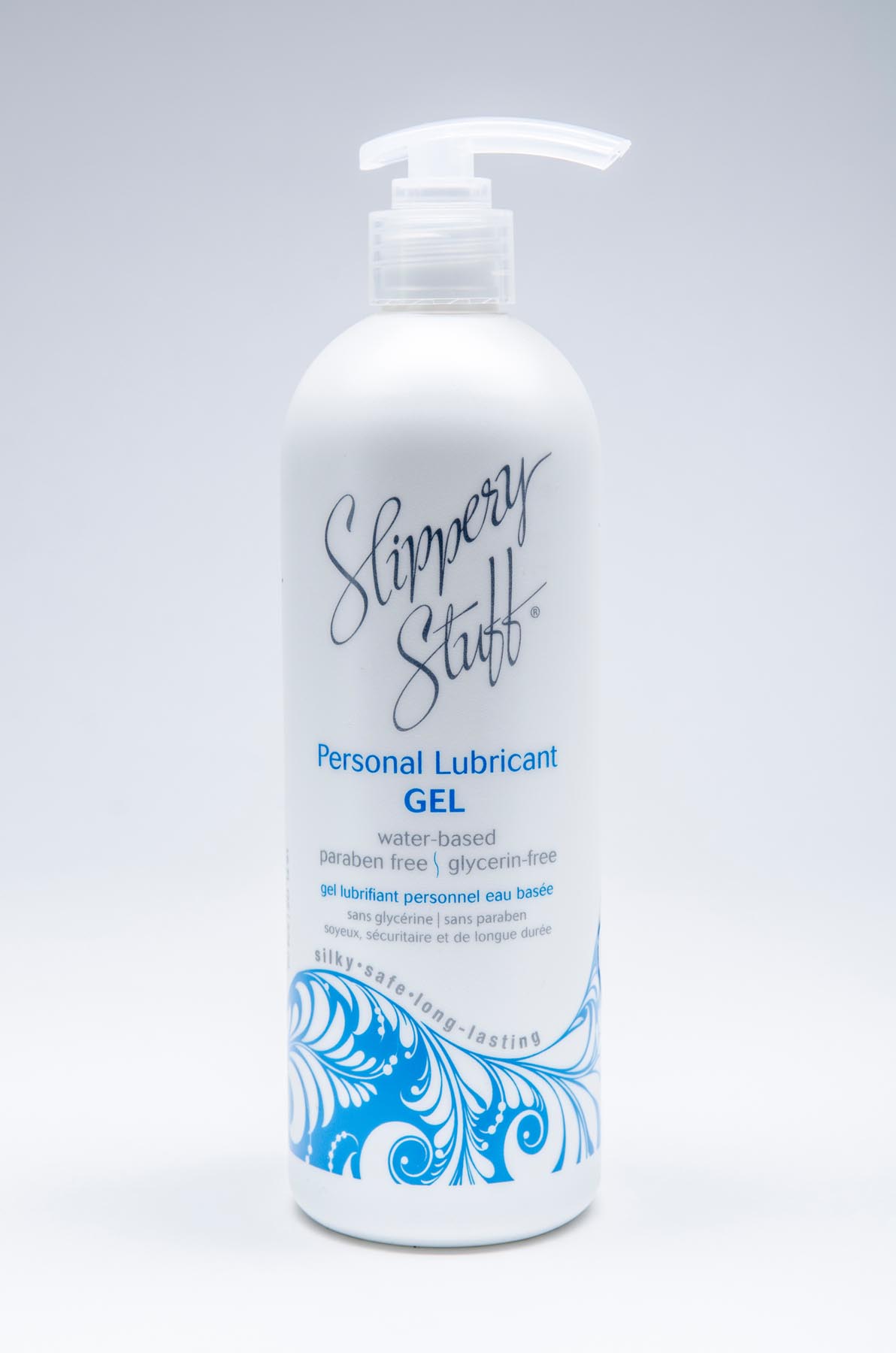 Slippery Stuff’s medical-grade formula side-stepped these issues. The brand (specifically its popular “Blue” and “Silicone-Free” versions) built its reputation on what it lacked. It was one of the first widely available lubricants to be formulated without glycerin, parabens, or oils.
Its water-based formula is also formulated to be closer to “iso-osmolar,” or at least significantly less hyper-osmolar than its competitors. This means it respects the natural balance of the vaginal and rectal tissues.
It doesn’t draw out moisture or disrupt the delicate cellular environment. For a post-menopausal patient with atrophic tissue or a patient recovering from radiation therapy, this gentle, non-irritating property is not just a preference; it’s a necessity.
For the physical therapist, the product’s viscosity is its true gift. It provides a luxurious, lasting glide that doesn’t become tacky. This is essential for the slow, sustained, and precise techniques central to pelvic floor rehab.
In the Clinic: The Physical Therapist’s Perspective
In the hands of a skilled PT, Slippery Stuff becomes a clinical tool that enables specific, effective treatment.
Manual Therapy (Internal): When a therapist is performing an internal trigger point release—for example, on a tight spot in the obturator internus muscle—they need to apply gentle, sustained pressure. A lubricant that gets sticky or dries out would create “drag,” causing friction and pain.
The long-lasting glide of Slippery Stuff allows the therapist to hold that pressure, “melt” the trigger point, and gently stretch the tissue without causing secondary irritation.
Scar Tissue Mobilization: Following an episiotomy, perineal tear, or C-section, scar tissue can become adhered, tight, and painful. Mobilizing this scar is key to restoring function. The lubricant allows the PT to gently “hook” and move the scar tissue, breaking up adhesions and improving tissue extensibility without aggravating the sensitive surrounding skin.
Biofeedback and Sensor Placement: When using internal biofeedback sensors to help a patient learn to contract or, more often, relax their pelvic floor, a clean, water-based lubricant is essential. It ensures patient comfort during insertion and doesn’t interfere with the sensor’s readings.
At Home: Empowering the Patient
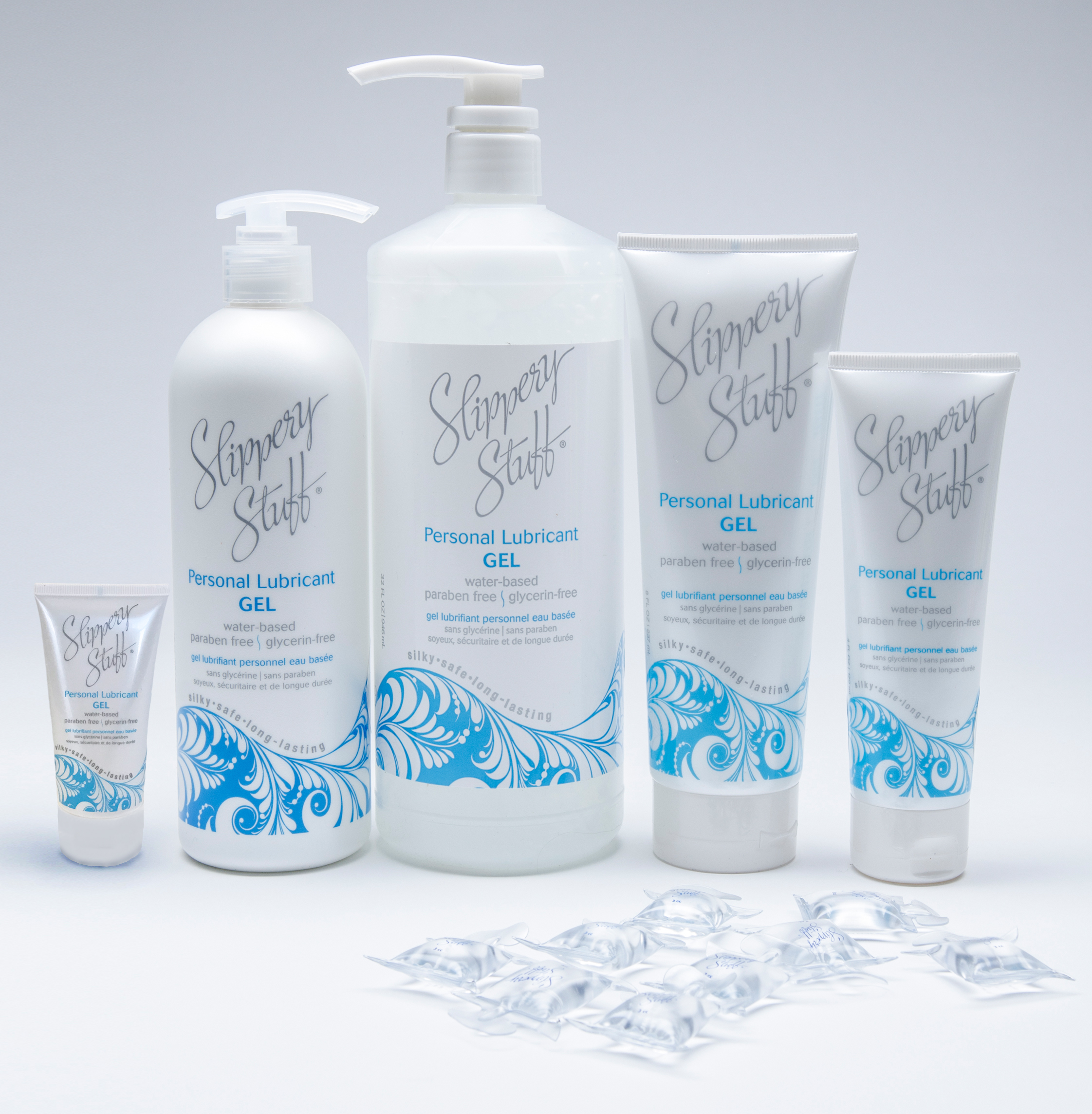 Pelvic floor therapy is not passive. A significant portion of a patient’s progress happens at home, through their “Home Exercise Program” (HEP). This is where Slippery Stuff transitions from a therapist’s tool to a patient’s ally.
Dilator (or “Vaginal Trainer”) Use: For patients with vaginismus or dyspareunia, a dilator program is a primary intervention for desensitizing the nervous system and teaching the vaginal muscles to relax.
The fear of insertion and pain is the biggest barrier. A generous amount of a safe, non-irritating, and truly slippery lubricant is non-negotiable. It provides the confidence and physical ease needed to make the program successful, breaking the “fear-pain-tension” cycle.
Pelvic Wand Use: Patients are often taught to use pelvic wands to self-treat internal trigger points. Just as with in-clinic manual therapy, the right lubricant is essential for finding and holding pressure on tight muscle bands without causing friction.
Maintaining Compliance: When a patient is already in pain, the last thing they need is a home program that causes more problems. By using a glycerin-free and paraben-free formula, the risk of a secondary yeast infection or irritation is minimized.
This safety and comfort are paramount to patient compliance, which is the ultimate driver of results.
From its roots as a medical imaging gel to its current status as a gold standard in pelvic health, Slippery Stuff is a testament to the importance of “body-safe” formulation. It’s more than just a lubricant; it’s an enabling technology.
It bridges the gap between therapist and patient, reduces friction and fear, and allows the difficult, necessary work of healing to happen safely and effectively.