
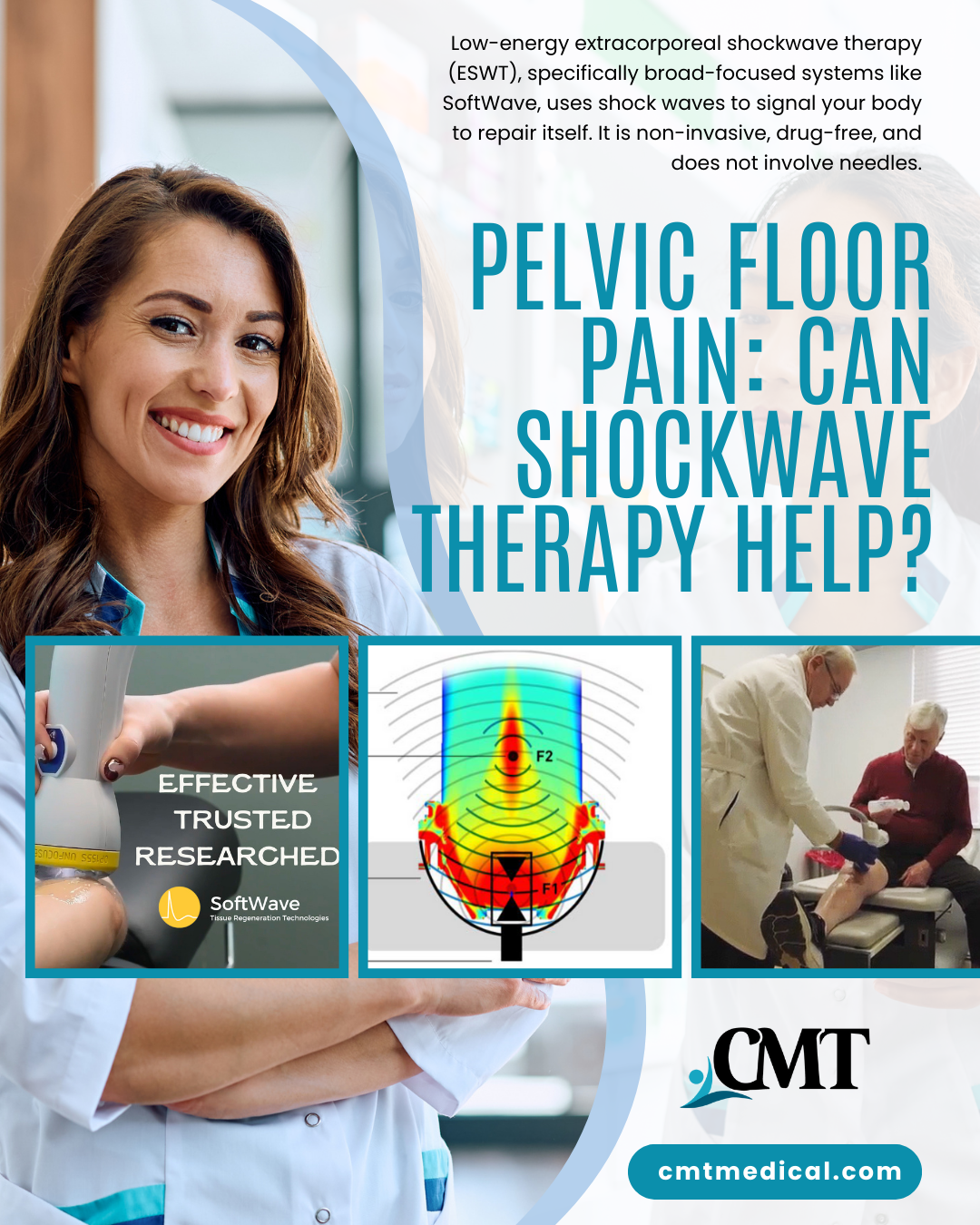
Pelvic Floor Pain: Can Shockwave Therapy Help?
Click Here or call 800-382-5879 for a Customized SoftWave Estimate.
By Stacey Roberts, PT, RN, MSN
If you have been struggling with persistent pelvic pain, you have likely heard the same explanation over and over: “Your muscles are too tight.”
While muscle tension is often part of the problem, it is rarely the whole story. For many men and women, standard physical therapy—stretching, internal release work, or relaxation breathing—helps to a point, but then progress stalls. The pain flares up again, or the therapy itself feels too tender to tolerate.
Recent clinical research suggests that we need to look deeper than just the muscles. We need to look at the biology of the pain.
This is where Regenerative Shockwave Therapy (SoftWave) comes in.
Why “Relaxing” Isn’t Always Enough
Pelvic floor pain is frequently a neuro-immune condition, not just a muscle problem.
When pain becomes chronic (lasting longer than 6 months), several biological changes happen in the pelvic region:
-
Nerves become sensitized: Your nerves start sending “danger” signals even when there is no active threat.
-
Inflammation gets stuck: A cycle of “neurogenic inflammation” keeps the tissue irritated.
-
Blood flow decreases: Tight, guarded tissues don’t get enough oxygen, which causes more pain.
If you have these underlying issues, trying to manually release a “tight muscle” can feel like trying to untie a knot in a rope that is on fire. You have to put the fire out first.
 How SoftWave Supports Pelvic Healing
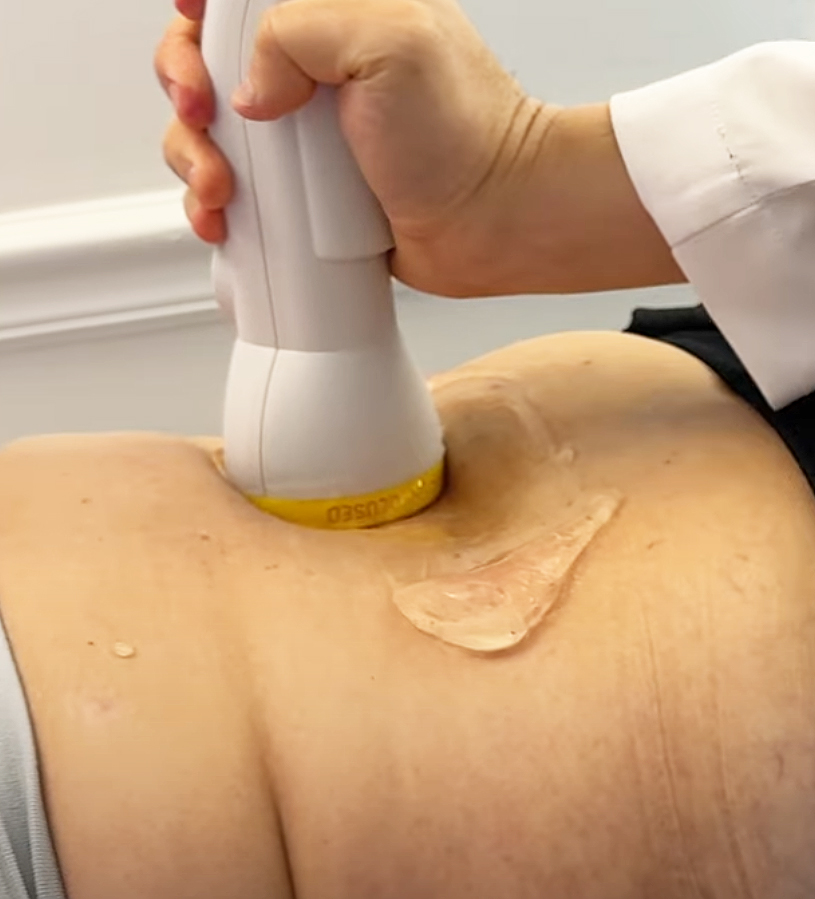
Low-energy extracorporeal shockwave therapy (ESWT), specifically broad-focused systems like SoftWave, uses shock waves to signal your body to repair itself. It is non-invasive, drug-free, and does not involve needles.
Here is how it helps address the root causes of pelvic pain:
1. Calming the Nerves (Neuromodulation)
Research shows that shockwave therapy can disrupt pain pathways. By lowering the baseline reactivity of the nerves, it can reduce the constant signal of discomfort. This “resets” the area, making it less sensitive to touch and movement.
2. Reducing Inflammation
Chronic pain is often fueled by chemical messengers called cytokines. SoftWave helps modulate the immune system, encouraging a shift from pro-inflammatory activity to anti-inflammatory healing. This helps cool down the “heat” in the pelvic bowl.
3. Improving Blood Flow & Tissue Quality
Healthy tissue needs oxygen. SoftWave has been shown to stimulate angiogenesis (the formation of new blood vessels) and improve microcirculation. This is critical for healing old scarring (from childbirth or surgery) and fibrotic tissue that feels stiff and unyielding.
SoftWave + Physical Therapy: A Better Together Approach
It is important to understand that SoftWave does not replace Pelvic Floor Physical Therapy. Instead, it makes therapy work better.
Pelvic rehab is essential for learning how to coordinate your muscles, breathe correctly, and move functionally. However, if your pain levels are too high, you can’t participate fully in rehab.
SoftWave acts as a bridge. By reducing pain sensitivity and improving tissue quality, it allows you to tolerate manual therapy and exercises that might have previously caused a flare-up. It turns a painful, guarded pelvis into a responsive, healable one.
Is SoftWave Right for You?
You may be a good candidate for this regenerative therapy if:
-
You have had chronic pelvic pain for more than 6 months.
-
You have tried pelvic PT but have plateaued or progress is very slow.
-
You have high sensitivity to touch (manual therapy hurts too much).
-
You are dealing with scar tissue (C-section, episiotomy, or surgery scars).
-
You suffer from conditions like Vulvodynia, Vaginismus, CPPS/Prostatitis, or Dyspareunia (painful sex).
The Bottom Line
Pelvic pain is complex. It involves your nerves, your immune system, and your tissue health. If you feel stuck in your recovery, it might be time to address the biology of your pain, not just the mechanics.
SoftWave therapy offers a safe, non-invasive way to lower pain levels and improve the environment of the pelvic floor, helping you get back to living your life comfortably.