
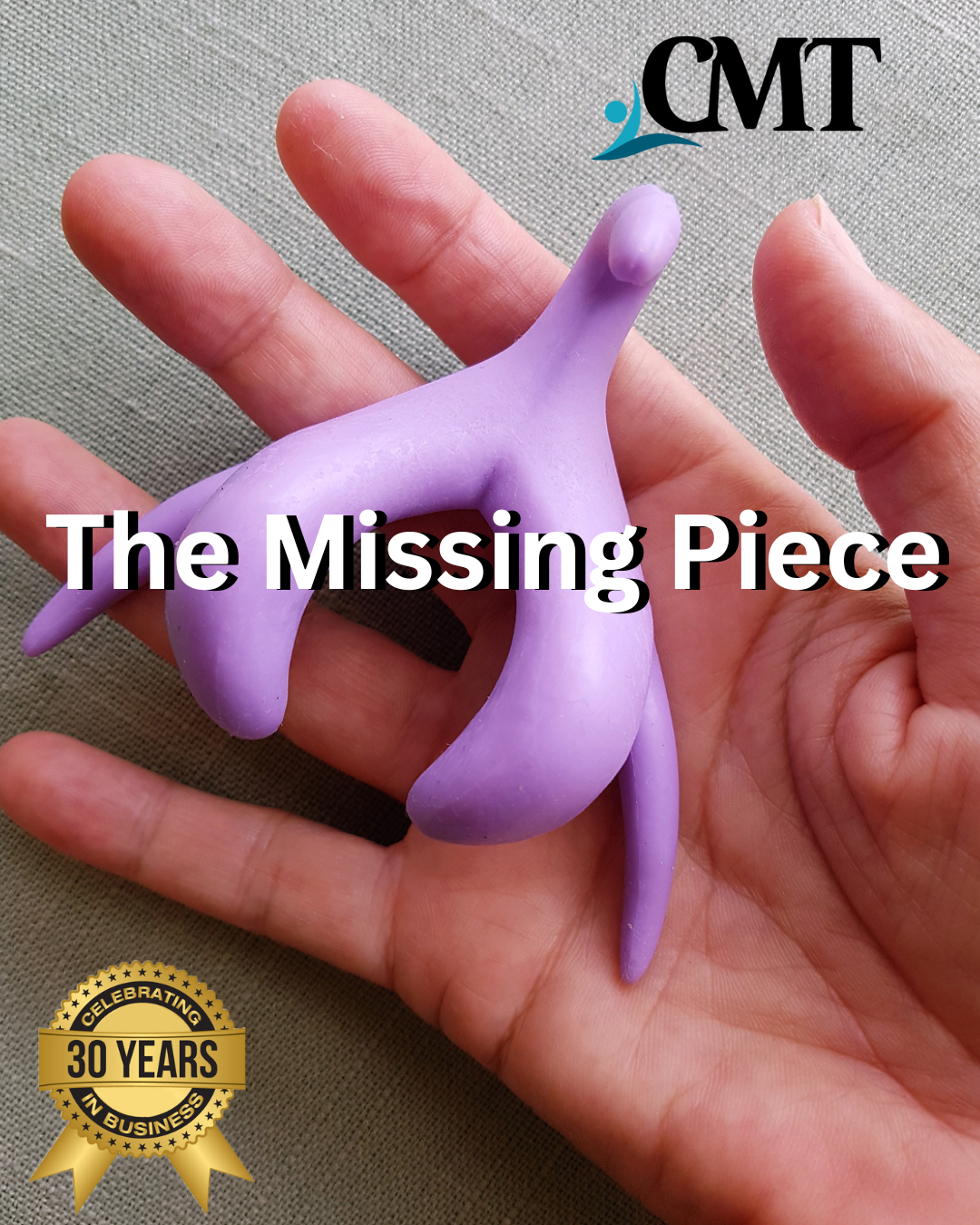
The Missing Piece
Reclaiming Clitoral Anatomy in the Therapy Room
As therapists, you are trained to hold space for the most intimate aspects of your clients’ lives—their fears, their joys, their relationships, and their sense of self.
You discuss sexuality with a goal of fostering health, pleasure, and empowerment. But what if a fundamental piece of your own education is missing?
Let’s be candid: Ask yourself to sketch the complete anatomy of the clitoris. Not just the visible part, but the entire structure. If you hesitate or draw a blank, you are not alone. You are, in fact, in the majority.
For centuries, medical textbooks and educational systems have presented a woefully incomplete picture of the clitoris, often reducing it to the external glans—a tiny “button”—while ignoring its vast, complex internal structure.
This historical oversight is not merely a trivial anatomical error; it has profound clinical implications for your work.
 The Anatomy You Weren’t Taught
The clitoris is not a pea; it’s an intricate, three-dimensional organ whose sole function is pleasure. The small, visible glans is merely the tip of an anatomical iceberg. The full structure includes:
- The Glans: The external tip, containing over 8,000 nerve endings—more than double the number in the head of the penis.
- The Body & Shaft: Extending internally from the glans.
- The Crura (Legs): Two “legs” that flare out from the body, wrapping around the urethra and vagina. These structures swell with blood during arousal and are stimulated through pressure and movement within the entire vulvar area.
- The Bulbs: Two bulbs of erectile tissue that sit on either side of the vaginal opening, underneath the labia. They also engorge during arousal, contributing to the feeling of fullness and sensitivity.
When you understand this complete structure, a client’s experience of pleasure and orgasm is fundamentally reframed. It ceases to be about hitting a specific “spot” and becomes about stimulating a wide, interconnected network.
Clinical Implications: Why This Knowledge is Essential
Empowering Clients with Language: When you lack the correct anatomical language, you inadvertently reinforce shame and mystery around female pleasure.
Providing clients with accurate terminology for their own bodies is a powerful therapeutic act. It allows them to articulate their experiences, desires, and difficulties with precision and confidence.
Addressing Sexual Dysfunction: How many clients have expressed frustration or shame about anorgasmia? Understanding that the clitoris is largely internal and stimulated indirectly can be a revolutionary insight.
It opens up conversations about different types of touch, pressure, and arousal that go far beyond direct glans stimulation, which can be overwhelming for some.
This knowledge is crucial when working with clients on issues of sexual pain (dyspareunia), as the engorgement of the clitoral bulbs plays a role in sexual comfort.
Transforming Couples Counseling: In relationship therapy, this education can dismantle years of misunderstanding and performance pressure. It moves the conversation from “You’re not doing it right” to “Let’s explore how this entire network is stimulated.”
It provides a concrete, biological map that couples can use to communicate more effectively and explore each other’s bodies with curiosity instead of anxiety.
Informing Trauma Work: For clients reclaiming their sexuality after trauma, understanding their own anatomy can be a profound step in reconnecting with and regaining agency over their bodies.
 Making the Abstract Concrete
Reading about anatomy in a book is one thing. Truly grasping its three-dimensional reality is another. This is where a tactile learning tool becomes indispensable for your own professional development.
To bridge this educational gap, we encourage you to explore a hands-on resource. Our clitoris model is a 1:1 scale model, anatomically correct in size and shape.
Constructed of durable, flexible soft rubber and silicone, it is designed to be held and used for teaching. Holding the model in your hands—feeling the relationship between the glans, the crura, and the bulbs—makes the anatomy immediately and permanently understandable.
It transforms abstract diagrams into tangible knowledge.
This isn’t just about becoming better sex educators. It’s about fulfilling our ethical obligation to be accurately informed.
By investing in your own anatomical literacy, we can challenge outdated narratives, reduce shame, and provide more effective, empowering care for your clients.
It’s time to find the missing piece and bring a complete understanding of pleasure into the therapy room.