
Pessary Options for Pelvic Organ Prolapse & Stress Urinary Incontinence
Store / Binders & Supports / Pessaries
Being diagnosed with Pelvic Organ Prolapse (POP) or Stress Urinary Incontinence (SUI) can feel overwhelming. Many women assume that surgery is the only path forward, but one of the most effective, immediate, and non-invasive treatments available is the vaginal pessary.
A pessary is a soft, flexible device—typically made of medical-grade silicone—that is inserted into the vagina to structurally support the pelvic organs (bladder, uterus, or rectum) or the urethra.
However, looking at a lineup of pessaries can be intimidating. They come in drastically different shapes, sizes, and mechanisms. So, how do you and your healthcare provider determine which one is right for you?
Here is a breakdown of the most common types of pessaries and the factors that influence which one will best suit your body and lifestyle.
 The Two Main Categories of Pessaries
While there are dozens of specific designs, most pessaries fall into one of two categories:
- Support Pessaries: These act like a structural shelf. They rest naturally behind the pubic bone to hold up the descending organs. They are generally easier to insert and remove yourself.
- Space-Filling Pessaries: These are used for more advanced prolapse. They work by filling the vaginal space or creating gentle suction against the vaginal walls to keep tissue from descending.
A Breakdown of the Most Common Pessaries
1. The Ring Pessary (The “Starter” Pessary)
- Best For: Mild to moderate prolapse (Stage 1 or 2).
- How it Works: Shaped exactly like a donut, this is the most commonly prescribed pessary. It simply folds in half for insertion and pops open to support the pelvic organs.
- The Lifestyle Benefit: It is incredibly easy for patients to insert and remove on their own. Furthermore, the standard Ring Pessary can typically be left in place during sexual intercourse.
- Note: It also comes “with support” (a thin membrane across the center) for women who need a little extra lift for bladder or rectal prolapse.
2. The Dish / Urethral Pessary
- Best For: Stress Urinary Incontinence (SUI) and mild prolapse.
- How it Works: Similar to a ring, but featuring a thickened knob or “bump” on one side.
- The Lifestyle Benefit: That specific knob sits directly beneath the urethra. When you sneeze, cough, or jump, the knob provides a backstop for the urethra, preventing accidental urine leakage. It is a game-changer for active women and runners.
3. The Gellhorn Pessary
- Best For: Moderate to severe prolapse (Stage 3 or 4), or for women with a wider vaginal hiatus who cannot keep a Ring pessary in place.
- How it Works: Shaped like a mushroom with a broad, flat base and a stem. The base supports the organs, while the stem points downward to keep the device from flipping.
- The Lifestyle Benefit: It offers incredibly robust support. However, it is difficult to fold and self-manage. Many women with a Gellhorn visit their doctor or pelvic physical therapist every 1 to 3 months to have it professionally removed, cleaned, and reinserted. It must be removed prior to sexual intercourse.
4. The Cube Pessary
- Best For: Severe prolapse where other pessaries repeatedly fall out.
- How it Works: A flexible, six-sided cube with concave cups on each side. These cups create a gentle suction against the vaginal walls, holding the prolapse up securely.
- The Lifestyle Benefit: It provides unparalleled support without relying on the pubic bone. However, because of the suction and surface area, it must be removed and cleaned daily to prevent tissue irritation and odor. It is ideal for women with good hand dexterity who don’t mind a daily insertion routine.
 Key Factors in Choosing Your Pessary
You won’t have to make this decision alone, but your doctor will ask you several lifestyle questions to guide the choice:
- Are you sexually active? If you want to leave the device in during penetrative intercourse, a Ring pessary is usually the only viable option. Other shapes must be removed beforehand.
- What is your manual dexterity? If you have arthritis or limited hand strength, a Cube pessary (which requires breaking a suction seal daily) might be frustrating. A Ring is much easier to manage, or a Gellhorn managed by a clinician might be best.
- What are your primary symptoms? If your main complaint is leaking urine when you laugh or run, a Urethral/Dish pessary will be targeted exactly to your needs. If you feel a heavy dragging sensation from a uterine prolapse, a Ring or Gellhorn is preferred.
The Importance of a Professional Fitting
A pessary is not a one-size-fits-all device that you can simply order online. The vaginal canal is dynamic, and sizing requires precision.
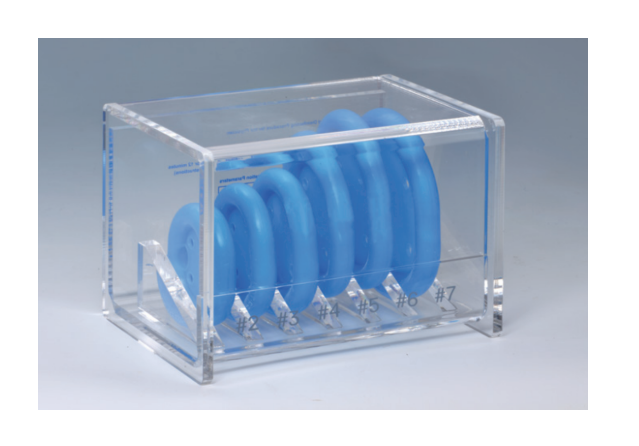
You will need a fitting appointment with a Urogynecologist or a specialized Pelvic Floor Physical Therapist. They possess fitting kits to trial different shapes and sizes. A correctly fitted pessary should not cause pain, and you shouldn’t even feel it once it is correctly placed. If it falls out when you bear down or use the restroom, or if it causes pressure, the size or shape needs adjusting.
Taking the Next Step
Using a pessary can immediately restore your confidence, allowing you to exercise, lift your children, and live your life without the constant distraction of pelvic heaviness or leakage. If you think a pessary might be right for you, schedule an evaluation with your pelvic health provider to explore your options.
Disclaimer: This article is for educational purposes only and does not substitute for professional medical advice. Always consult with a healthcare provider or a certified pelvic floor physical therapist for proper diagnosis and device fitting.